Great architecture does more than shelter an event—it reshapes the energy, accessibility, and long-term property value of the neighborhoods around it.
With the Confederation of African Football (CAF) officially confirming Nairobi as Kenya’s sole host city for PAMOJA AFCON 2027, attention across East Africa has shifted to a decisive question: which venue will stage the tournament’s opening match and grand final?
Ahead of the June 19, 2027 kickoff—and with an inaugural international friendly between Bayern Munich and Ajax scheduled for January 5, 2027, to officially commission the arena—Kenya’s newest flagship development stands out as a premier contender.
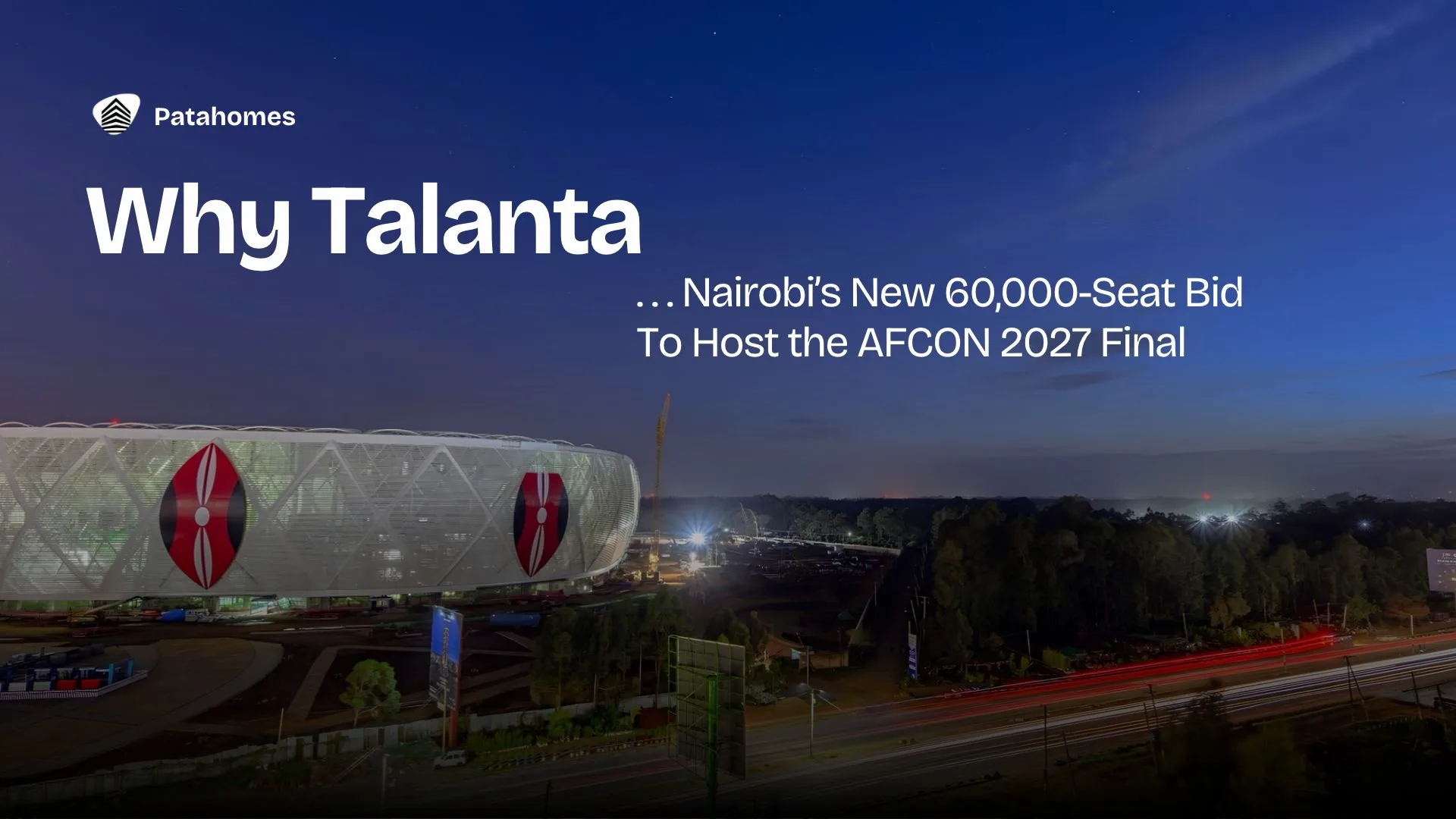
Located at the historic Jamhuri Grounds along Ngong Road, Talanta Sports City (officially named the Raila Odinga International Stadium) is a 60,000-seat complex engineered to set a new benchmark for East African civic architecture. At Pata Homes, we closely track landmark infrastructure projects that elevate Nairobi’s skyline and unlock residential growth.
Here is an inside look at the design philosophy behind the stadium and what it means for Nairobi’s property market.
Architecture Rooted in Kenyan Heritage
Rather than importing a generic glass-and-steel silhouette, the architects behind Talanta Sports City anchored the structure in unmistakable Kenyan cultural identity. Its sweeping, asymmetrical exterior facade integrates bold structural motifs inspired by Maasai shields and spears, carried consistently across its canopy framework and eight primary entrances—a design language that mirrors the East African shield emblem CAF unveiled for AFCON 2027.
Inside, the three-tier, 60,000-seat spectator bowl is engineered with steep sightlines that bring fans closer to the touchline while trapping crowd acoustics for electric match-day atmosphere. After sunset, programmable LED lighting across the exterior skin transforms the arena into an illuminated architectural beacon along the Ngong Road corridor.
Smart Engineering and Sustainable Design
Modern landmark developments are increasingly evaluated on environmental performance alongside visual impact. Talanta Sports City incorporates integrated solar power panels and rainwater harvesting systems engineered to capture, filter, and recycle greywater for non-potable maintenance across the wider complex.
Beneath the players’ feet lies a GrassMaster hybrid turf system—a specialized surface blending natural Monaco-variety Bermuda grass with millions of vertically stitched synthetic fibers. Supported by sub-air drainage and aeration technology, the pitch is built to recover rapidly and maintain elite playability throughout dense tournament schedules and Nairobi’s rainy seasons.
Hospitality and the Surrounding Master Plan
Designed as a multi-purpose commercial and sporting destination rather than a single-use venue, the broader master plan includes:
- 52 glass-fronted luxury skyboxes offering panoramic pitch views for corporate hosting and VIP experiences.
- Three dedicated training pitches, including a secondary venue equipped with its own 1,500-seat grandstand.
- Upgraded transit and road infrastructure, including improved Ngong Road connectivity and commuter rail links designed to move tens of thousands of visitors efficiently between the stadium, Jomo Kenyatta International Airport, and key residential districts.
What Talanta Sports City Means for Nairobi Real Estate
In real estate, mega-infrastructure of this scale rarely exists in isolation—it acts as a powerful catalyst for surrounding residential corridors. Because CAF has concentrated all of Kenya’s AFCON 2027 matches exclusively in Nairobi, the capital will absorb the full influx of visiting teams, media, corporate sponsors, and international supporters.
For homeowners and property investors, proximity to Talanta Sports City drives value across three core areas:
- Short-Stay and Serviced Apartment Demand: With test matches beginning in January 2027 and the continental tournament running from June to July 2027, demand for furnished apartments, boutique stays, and executive rentals is projected to surge across Kilimani, Lavington, Kileleshwa, and Karen.
- Accelerated Road and Transit Connectivity: Public infrastructure upgrades tied to the Ngong Road and Southern Bypass corridors permanently reduce commute times—one of the strongest drivers of tenant retention and residential desirability in Nairobi.
- Long-Term Capital Appreciation: Neighborhoods bordering major civic, sporting, and entertainment anchors—such as Karen, Lang’ata, and the Ngong Road belt—historically experience sustained commercial investment and stronger long-term land and property appreciation well beyond the tournament itself.
Investing in Nairobi’s High-Growth Corridors
Whether you are searching for a family residence in Karen, a contemporary townhouse in Lavington, or a high-yield investment apartment in Kilimani, positioning yourself near Nairobi’s major infrastructure catalysts remains a proven real estate strategy.
Ready to explore curated homes and investment opportunities near Nairobi’s fastest-growing corridors?
Browse our latest listings at patahomes.com or connect with our property advisory team today.